
The Enduring Allure of Step-Cut Gemstones
In the diverse world of gemstones, where brilliance and sparkle often dominate the conversation, step-cut stones stand apart with their understated elegance and distinct geometric charm. Unlike their brilliant-cut counterparts, which are designed to maximize light reflection and scintillation, step cuts prioritize clarity, colour, and a unique visual phenomenon known as the "hall of mirrors" effect. Let’s dive into the fascinating history, intricate production and profound design impact of classic step cuts, including the Emerald, Asscher, and Carré, celebrating their timeless appeal in fine jewellery.
Understanding Step Cuts: A Foundation
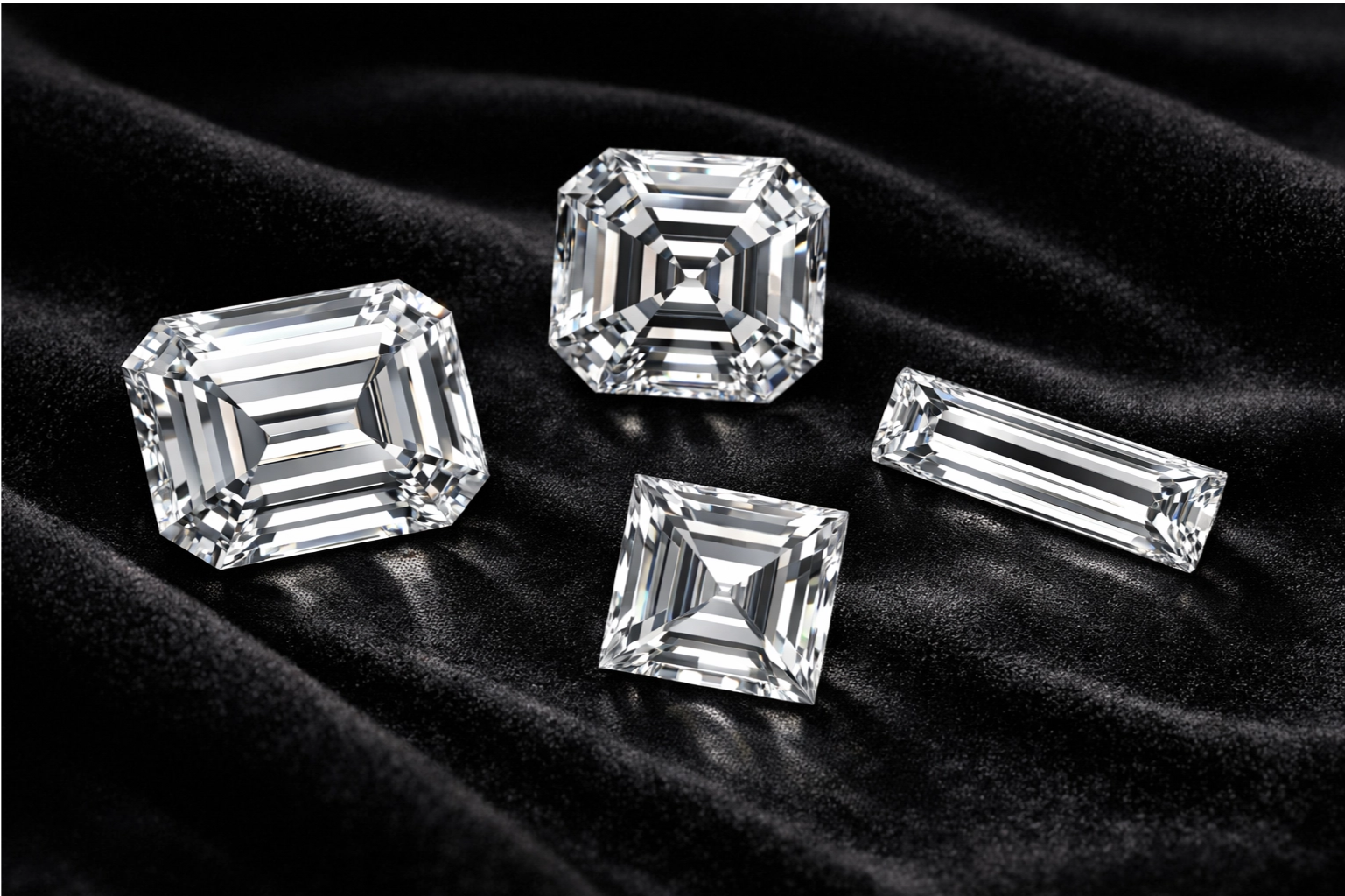
Step-cut gemstones are characterized by their parallel, often rectangular or square, facets that resemble a series of steps or staircases. These facets are typically arranged concentrically around the stone's table, creating broad, open surfaces that offer an unobstructed view into the gem's interior. This design choice inherently emphasizes the stone's transparency and natural colour, making any inclusions or colour imperfections more apparent. Consequently, step-cut gemstones often require higher clarity and colour grades to achieve their full aesthetic potential.
The primary distinction between step cuts and brilliant cuts lies in their interaction with light. While brilliant cuts are engineered for maximum sparkle and fire, step cuts produce a more subtle, sophisticated glow. Their large, flat facets create dramatic flashes of light and dark, a captivating effect often described as a "hall of mirrors," which draws the eye into the stone's depth rather than reflecting light outwards in a dazzling display .
The Classic Step Cuts: A Detailed Look
1. Emerald Cut
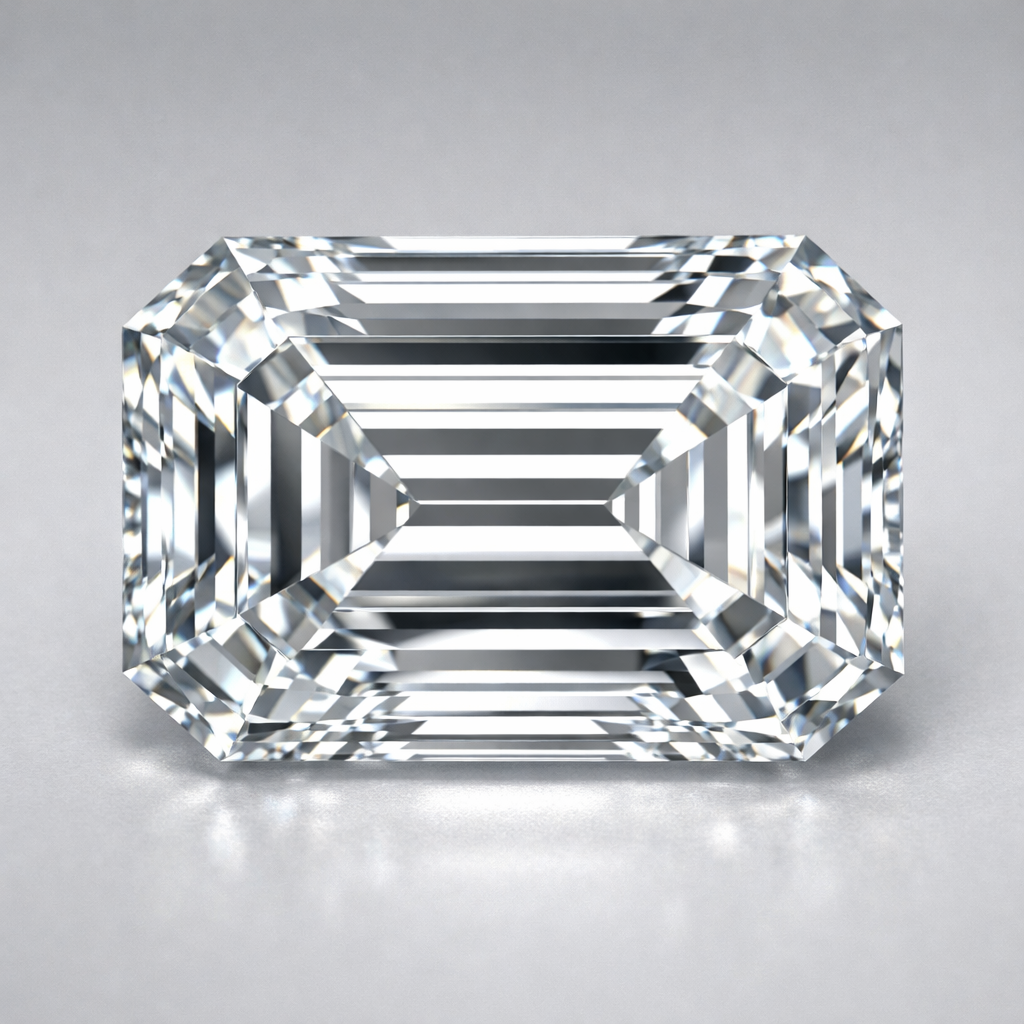
The emerald cut is perhaps the most recognizable of all step cuts, with a history stretching back to ancient times. Its origins can be traced to 330 BC, when ancient Egyptians began mining and cutting emeralds. The modern form of the emerald cut, however, largely stabilized in the 1940s . This cut features a rectangular shape with distinctive cropped corners, giving it an octagonal outline. The primary purpose of these cropped corners was originally to protect the relatively fragile emeralds (which score 7.5-8 on the Moh’s hardness scale) from chipping during wear .
With typically 57 or 58 facets, the emerald cut is celebrated for its ability to showcase a gemstone's colour and clarity rather than its brilliance. Its long, elegant lines and sophisticated appearance made it a favourite during the Art Deco era, and it continues to be a popular choice for those seeking a refined and understated aesthetic in their jewellery.
2. Asscher Cut
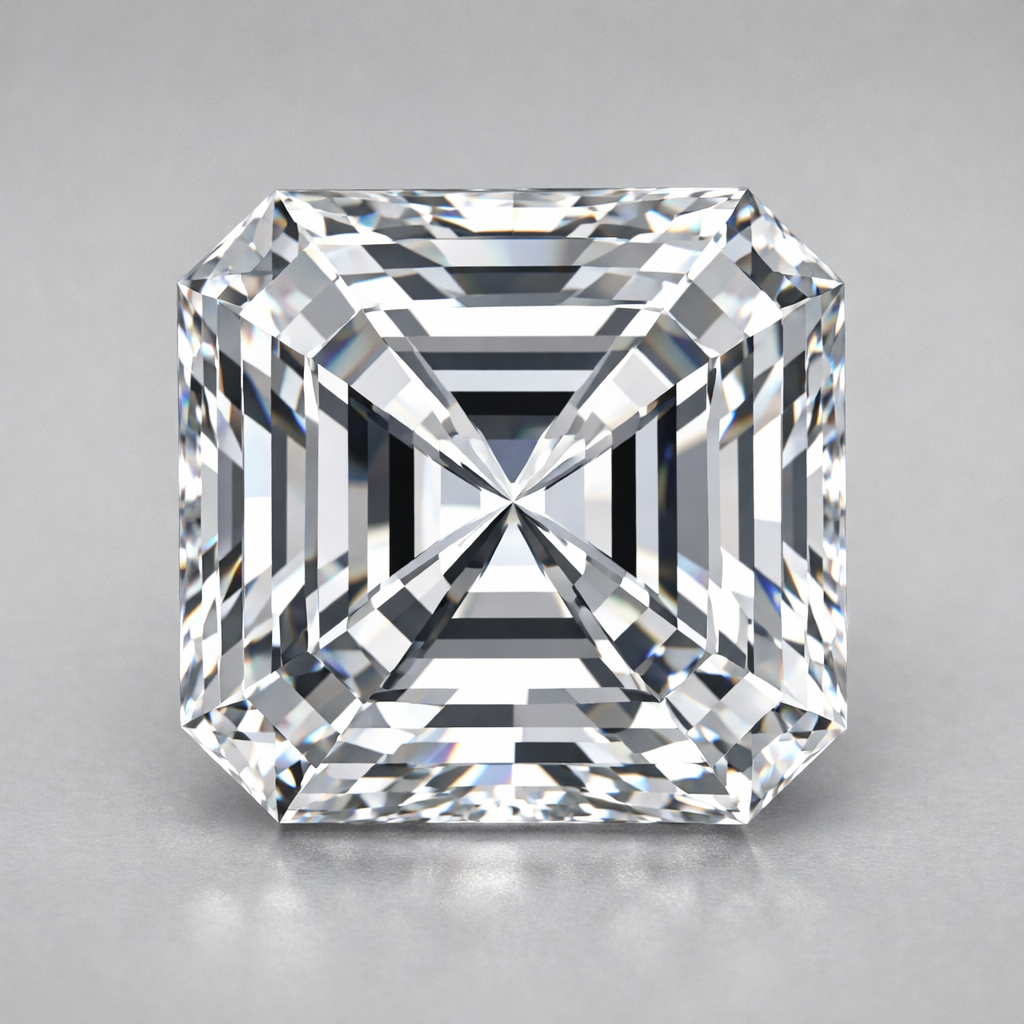
The Asscher cut, invented in 1902 by Joseph Asscher of Amsterdam, was revolutionary as the first patented diamond cut in history . This distinctive cut is square with deeply cropped corners, creating a unique octagonal shape. A hallmark of the Asscher cut is its captivating "windmill" facet pattern, where facets converge towards the culet, forming an X-shape visible through the table .
In 2001, Joseph Asscher's descendants, Edward and Joop Asscher, revised the original design, introducing the Royal Asscher cut with 74 facets, an increase from the original 58. This modern iteration was designed to enhance the stone's light performance while retaining its classic geometric appeal . The Asscher cut's unique blend of vintage charm and geometric precision makes it a favored choice for antique-inspired and contemporary designs alike.
3. Carré Cut
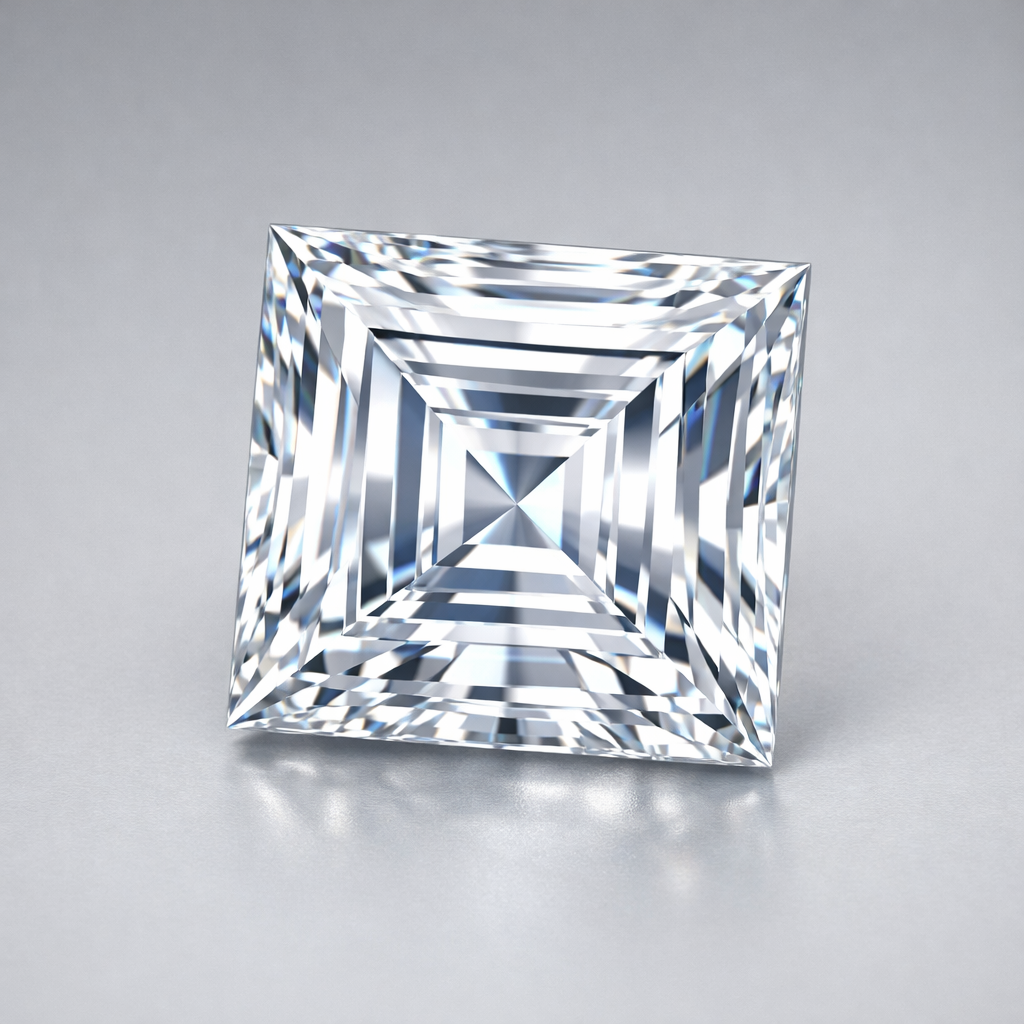
The carré cut, deriving its name from the French word for "square," has a history rooted in early diamond faceting and gained significant popularity during the Art Deco period. Unlike the emerald and Asscher cuts, the carré cut is a perfect square with sharp, uncropped 90-degree corners . This characteristic gives it a very clean, minimalist, and architectural aesthetic.
Due to its precise, sharp edges, the carré cut is often used for accent stones or in channel settings, where its straight lines can create seamless patterns. Its emphasis on pure geometric form and unadorned beauty makes it a striking choice for modern and minimalist jewellery designs.
4. Other Notable Step Cuts: Baguette and Tapered Baguette
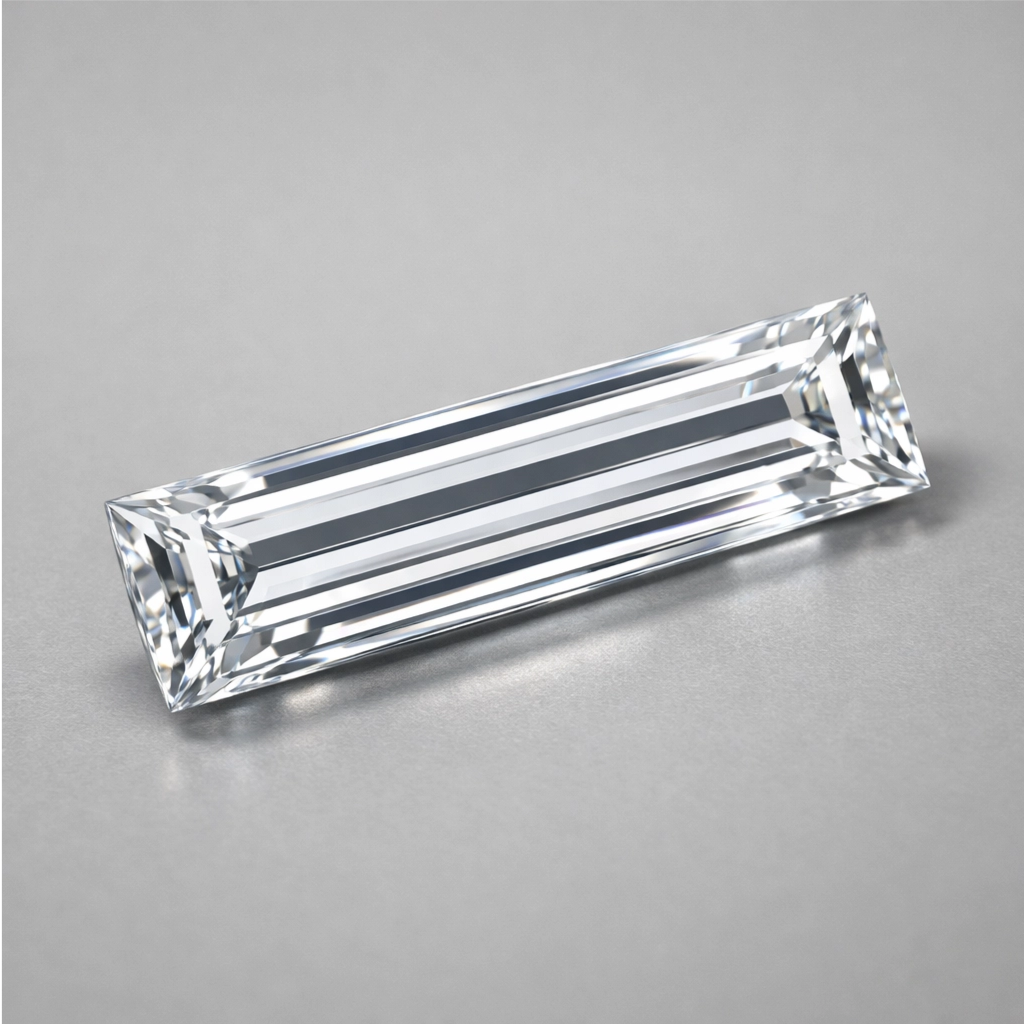
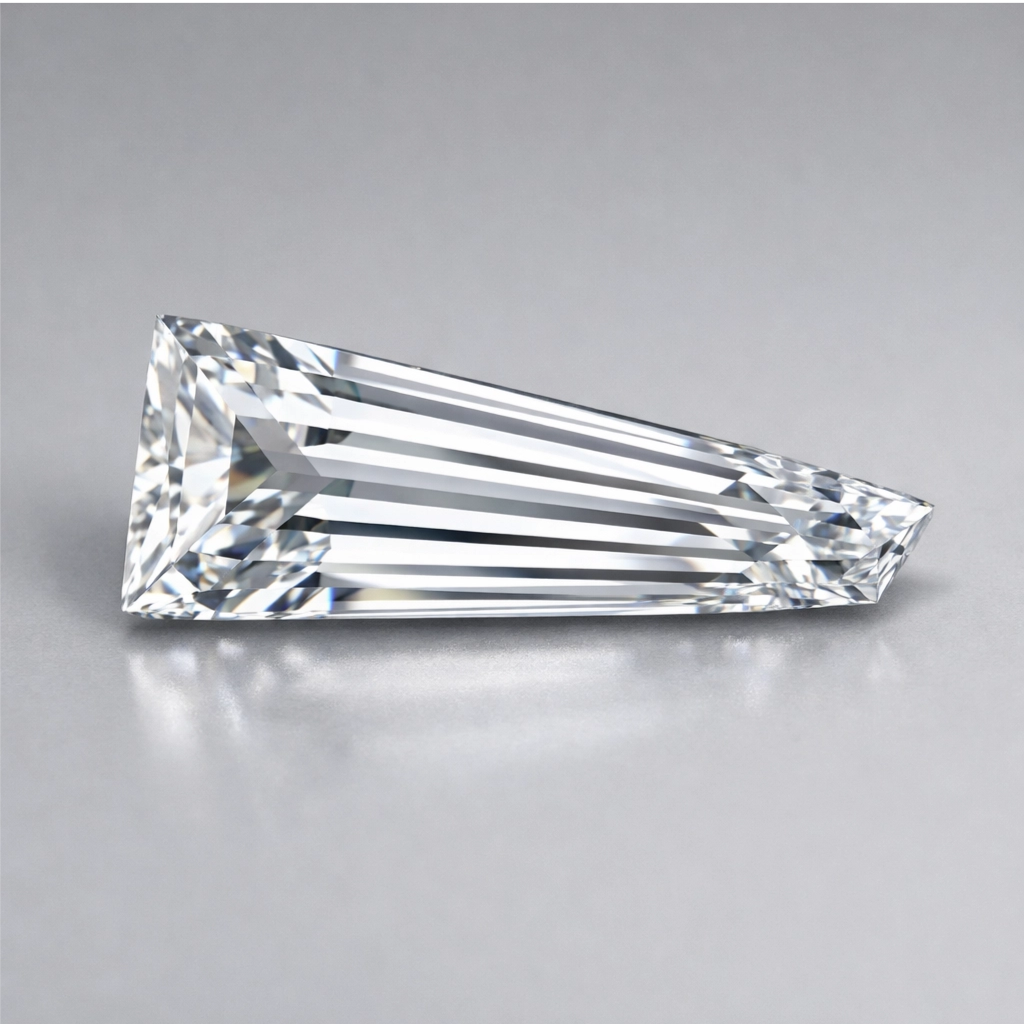
Beyond the prominent emerald, Asscher, and carré cuts, other step-cut variations contribute to the family's versatility. Baguette cuts are long, slender rectangular stones with sharp corners, while tapered baguette cuts narrow at one end, forming a trapezoidal shape. These cuts are frequently employed as side stones, enhancing a center gem, or arranged in intricate patterns within a piece of jewellery, adding subtle linear elegance .
The Art and Science of Cutting Step-Cut Gemstones
The creation of a step-cut gemstone is a meticulous process that combines traditional artistry with modern technology. The journey from a rough stone to a finished gem involves several stages, including cleaving or sawing, grinding, polishing, and faceting. Historically, gemstones were cut manually by skilled artisans using a faceting machine, where angles and indices were set by hand .
Today, while manual faceting remains a revered craft, industrial production often utilizes automated faceting machines and laser cutting technologies. These advancements allow for greater precision, consistency, and efficiency, particularly in mass production . An interesting aspect of step-cut production is their potential for higher yield from certain rough stone shapes, such as elongated crystals, compared to brilliant cuts, which often require more material removal to achieve their complex facet patterns .
What Step Cuts Bring to Design
Step cuts offer a distinct set of advantages in jewellery design:
• Emphasis on Clarity and Colour: The broad, open facets of step cuts provide an unobstructed window into the gemstone, making them ideal for showcasing exceptional clarity and vibrant natural colour. Any internal characteristics or subtle hues are prominently displayed, making these cuts perfect for fancy coloured diamonds or richly saturated coloured gemstones .
• The "Hall of Mirrors" Effect: This unique optical phenomenon, characterized by alternating flashes of light and dark, creates a mesmerizing depth within the stone. It's a sophisticated visual experience that differs significantly from the fiery sparkle of brilliant cuts.
• Versatility: Step cuts seamlessly integrate into a wide range of jewellery styles. Their clean lines and geometric precision complement Art Deco and vintage-inspired pieces, while their minimalist aesthetic makes them a perfect fit for contemporary and modern designs. They can serve as stunning centerpieces or elegant accent stones.
Choosing a Step-Cut Gemstone
When selecting a step-cut gemstone, several factors warrant consideration:
• Clarity: Due to their transparent nature, inclusions are more visible in step cuts. Therefore, a higher clarity grade (typically VS2 or better) is often recommended to ensure a clean appearance .
• Colour: Step cuts excel at highlighting a gemstone's natural colour. For colourless diamonds, a higher colour grade will be more apparent. For fancy coloured diamonds or coloured gemstones, the cut will beautifully showcase their hue.
• Personal Style: Ultimately, the choice comes down to personal preference. If you appreciate clean lines, geometric forms and a sophisticated, understated elegance over overt sparkle, a step-cut gemstone is an excellent choice.
A Final Note…
Step-cut gemstones, with their rich history, precise craftsmanship, and distinctive aesthetic, offer a compelling alternative to more common brilliant cuts. From the classic elegance of the emerald cut to the geometric allure of the Asscher and the sharp modernity of the carré, these stones celebrate clarity, colour, and a unique optical depth. Their enduring appeal lies in their ability to convey sophistication and timeless beauty, making them a cherished choice for discerning jewellery enthusiasts worldwide.
References
[1] International Gem Society (IGS) - History of Asscher Cut Diamonds:
[2] RockHer - A Brief History of the Emerald Cut:
[3] Langerman Diamonds - Your Guide to Step Cuts:
[4] Natural Diamonds - The Carré Cut Diamond: A Rare Square Shape With Art:
[5] Dalloz Stones - Cutting of synthetic or natural stones:
[6] SoBling Jewelry - How To Do Gemstone Shaping, Mounting, and Faceting cutting?: